Welcome to The Hero Church
The gates are open. Who we are, what we make, how we test it, and how to walk in as an adult who wants the truth before the chocolate.
You found the gate. Maybe a friend said the name. Maybe you typed a question into a search bar at one in the morning and this page answered. However you arrived, come in. This is a letter from the sanctuary, written to tell you plainly what The Hero Church is, what we make, and what we ask of the people who receive it.
The short version: we are a sanctuary organized as a church. Our sacraments are chocolate bars and gummies made with sacred mushrooms, in small batches, from organic ingredients, tested by an independent lab before and after each batch. They are shared with members, adults twenty-one and over, who have told us who they are and read what we ask them to read. The long version is the rest of this letter and the five essays behind it.
We write the way we make things: with the amounts named and the claims kept small. If you came looking for a page that promises a cure, a shortcut, or a law that holds in every room you could carry a bar into, you will not find it here. Law is local and it moves. Medicine belongs to clinicians. What we can promise is a batch we can name, a dose you can count, and a community that takes the night seriously.
What a sanctuary is, and what it is not
A sanctuary is a place where something is protected. For us the protected thing is the practice: the intention a person brings to a sacrament, the care that goes into making it, and the honesty of the conversation around it. We are not a dispensary with a steeple painted on the door, and we are not a clinic. We are a congregation of makers and members who believe that what you take into your body deserves ceremony, and that ceremony deserves better than an afterthought.
Being organized as a church is not a costume. It is the form that lets us do this as a community rather than as a retail transaction. Sacraments go to members. Members are adults who have affirmed, in their own words, that they are of age and understand what they are receiving. That affirmation is not a checkbox we hide in a footer. It is the door.
The name comes from our founding idea. Be your own hero. Not because a bar of chocolate makes anyone heroic, but because the work of looking inward, of choosing meaning over noise, of coming back to your life a little more awake, is work only you can do. We make the sacrament. You make the journey. Psibyl, the guardian you will meet across this site, is the figure we drew to stand for that: wisdom earned by walking the path, and the courage to walk it.
What we make
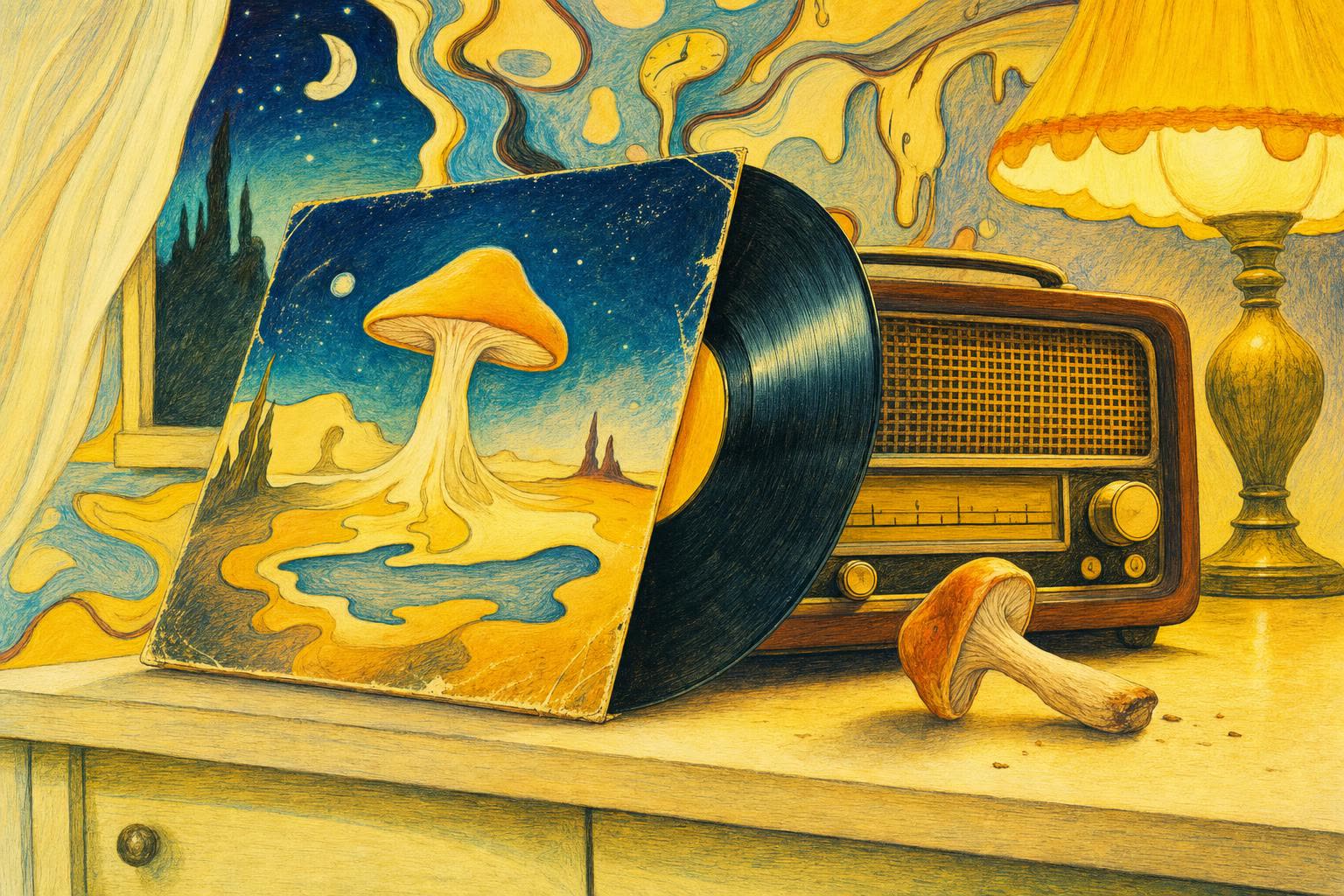
Four chocolate bars and one gummy. The bars are rose, mint, lavender, and a mystery bar that rotates through flavors we are trying. The gummies are vegan and come in watermelon, passionfruit, pineapple, and black cherry, eight to a pack. Every piece, bar square or gummy, is one measured serving. We dose by the piece, not by the milligram, because a piece is something an adult can count in a dim room and a milligram is not.
The ingredients are the whole story. The cacao and cacao butter are wild-harvested from trees in the Andes, from the jungle rather than a plantation, trees that average around seventy years old. We chose that source because it is the cleanest we have found, with no cadmium or lead in the tests we run. The sugar is organic. The mushrooms are fruiting body, dehydrated, and ground to twenty microns on a stone grinder at a facility that runs under good manufacturing practice. There are no nuts and no dairy in the bar.
Every batch of mushrooms is tested for potency before it goes into the chocolate, and the finished bar is tested again by an independent domestic lab for potency, impurities, and alkaloids. The batch number on your wrapper corresponds to a certificate of analysis. If you want to see it, ask, and we will send it. That is the quality system: a number on the foil that leads to a document a stranger produced.
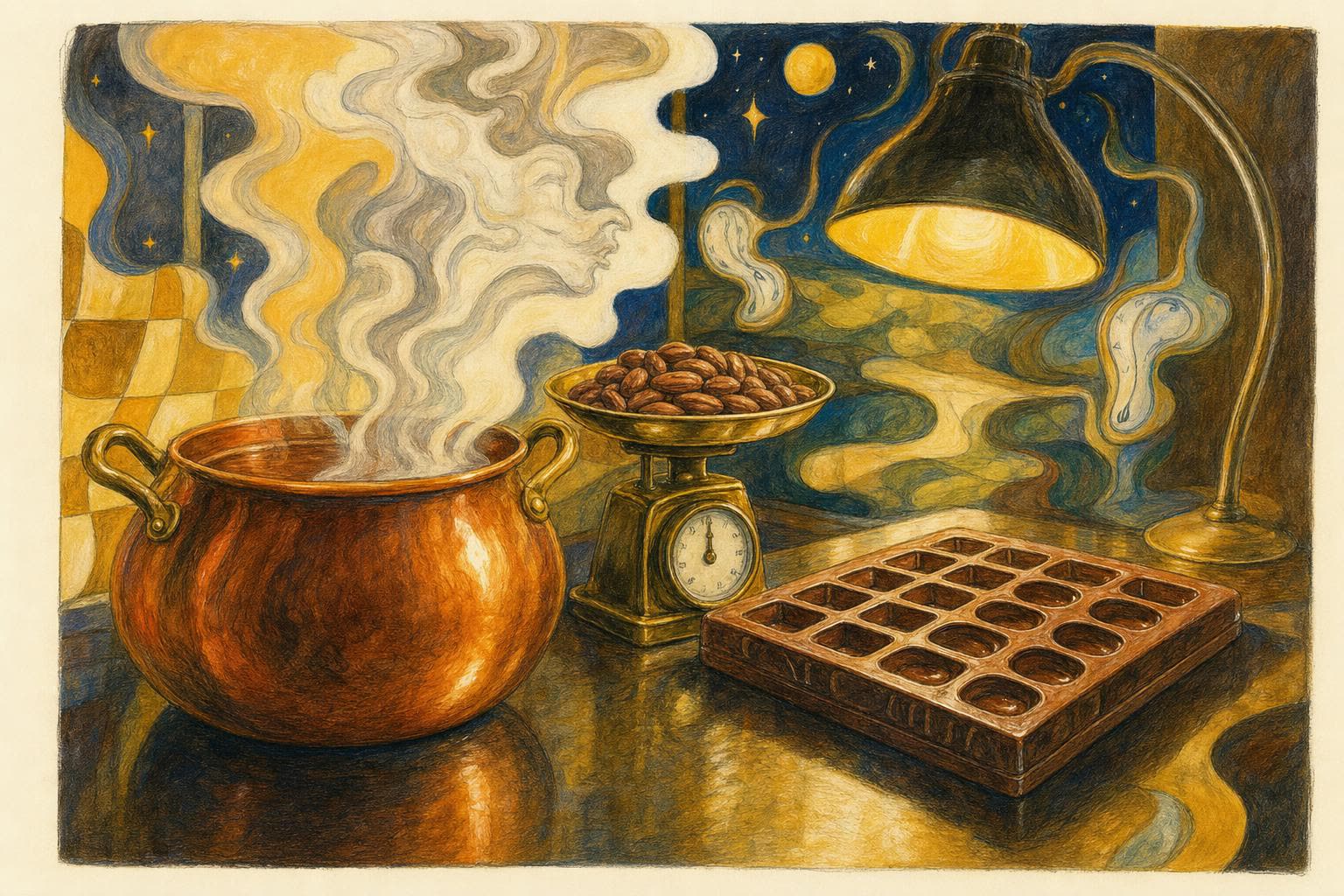
We keep the batches small on purpose. A large batch would let us say less about what is in it, and saying less is the direction we refuse to move in. The kitchen essay in this issue tells the rest: what a batch night looks like, why tempering cannot be rushed, and what we will and will not print on a wrapper.
How we walk
Gentleness over intensity. Craft over scale. Warm light over harsh glare. Those three lines are not a brand voice; they are the questions we ask when a batch is ready and when a sentence is ready. Does it need to be louder, or does it need to be truer? We usually find that truer is quieter.
For the sacrament itself we use a framework called Walk, Run, Fly. One to three pieces is a walk: a small lift, some laughter, sharper colors. Four to seven is a run: introspection, a shift in what you notice, a feeling of connection. Eight to ten is a flight, the heroic dose, which we describe on the dosage guide and do not recommend to anyone who has not walked first. These are the experiences our members report. They are not medical claims, and the page that lists them says so in the same breath.
Some rules do not bend. Twenty-one and over. Talk to your physician first if you take psychiatric medication or live with a mental health condition. Not while pregnant or breastfeeding. Never before driving. Keep it away from children, and keep the poison control number where you can find it. We print these on the dosage guide, and we would rather you read them there twice than learn them once the hard way.
Start low and go slow. You can always take another piece later in the night. You cannot take one back.
Why we ask you to join
Sacraments are shared with members, so before your first order we ask you to join the church. It takes about a minute. You tell us your name and an email, you choose a password, and you read and confirm one statement about your age and your understanding of what you are receiving. The words of that statement come from the policy we publish, not from a marketing draft, and they change only when the policy does.
We ask because a sanctuary knows who is at its table. Not to build a mailing list, though you can opt into our letter if you want it, and not to make a sale feel like an initiation. We ask because the alternative is anonymous retail, and anonymous retail is exactly the thing we organized ourselves to avoid. A member is a person we can write to if a batch needs a note, a person who has heard the safety list before the wrapper comes off.
Membership is free, and it does not obligate you to buy anything. Plenty of members read the Journal and never order. That is a fine way to be part of this. The public table is public. The shop is optional. The sacrament is for those who choose it.
What this Journal is for
This is the public table. The essays here are written by the sanctuary, in our own words, about the things people actually type into a search bar before they find us. What a psychiatrist can and cannot promise about mushrooms and mood. Whether the night itself is creative work. Which musicians have said the word out loud in public and what that does and does not mean. Set, setting, age, and the list of claims we refuse to make. And the kitchen: how the chocolate is made, in enough detail that you could catch us if we lied.
When we cite someone, we name them. Roland Griffiths and the 2006 paper from Johns Hopkins. Norman Zinberg and the 1984 book that gave everyone the phrase set and setting. A psychiatrist named Ed Jesalva who writes for patients about mood. A country singer named Margo Price and an interview she gave in 2023. We read those people as neighbors. We do not reprint their sentences and we do not borrow their authority for our foil.
When the science is thin, we say it is thin. When a question belongs to a clinician or a lawyer, we send you to one. A journal that cannot say I do not know is a sales page with better typography, and we have no use for one of those.
If a sentence in this issue sounds like it was lifted from a magazine you already love, tell us and we will cut it. We would rather be plain than borrowed.
How to visit
Visit the shop the way you would buy bread from a neighbor who takes bread seriously. Ask what is in this batch. Ask when it was made and what the lab found. If we cannot answer those questions with a date, a list, and a document, do not buy from us. A church that cannot answer them is performing.
Read the dosage guide before your first night, and read the safety essay in this issue after it. Then decide, as an adult, in a room you chose, with water on the table and a person who knows where you are. The sacrament is the smallest part of a good night. The room is most of it.
Your order ships in plain packaging with nothing on the outside to say who sent it or what is inside, within two or three business days, with tracking by email. If something arrives damaged or wrong, write within fourteen days and we will make it right. Opened sacraments cannot come back, for the same reason a bakery cannot take back a bitten loaf.
What we will not become
We will not become a clinic, a nightclub, or a content farm that reprints other people's sentences about the 1960s because those sentences already rank. We will not tell you a bar is legal wherever you happen to be standing. We will not stack testimonials like a storefront afraid of silence. We will not sand our rough edges into a wellness brand.
We will stay a kitchen and a congregation. That means we sometimes close. It means an answer to your email may take a day, because the same people who answer mail also weigh cacao. It means the Journal will not update at dawn when a headline drops, because dawn is for sleeping after a batch. A sanctuary that can never close is one that will eventually lie about being open.
A last practical thing
If you are twenty-one and came for the shop, it is next door on this site, and joining takes a minute. If you came for a paper, the healing desk names the ones we have read and the limits of what they show. If you came because a friend whispered, tell them we said hello, and that we will not make them a prophet.
If you are not twenty-one, close the tab. We mean that. The rule does not live only in a footer; it lives here, in the body of the letter, because bodies are how letters work.
If you are in trouble, you need a local emergency number, not a bar of chocolate. Leave mid-sentence if you need to. Come back when you can. The essays will be here, and so will we. Write to sanctuary@mail.herochurch.org when you have a question the label and the guide did not answer. We read everything, and we answer in daylight.
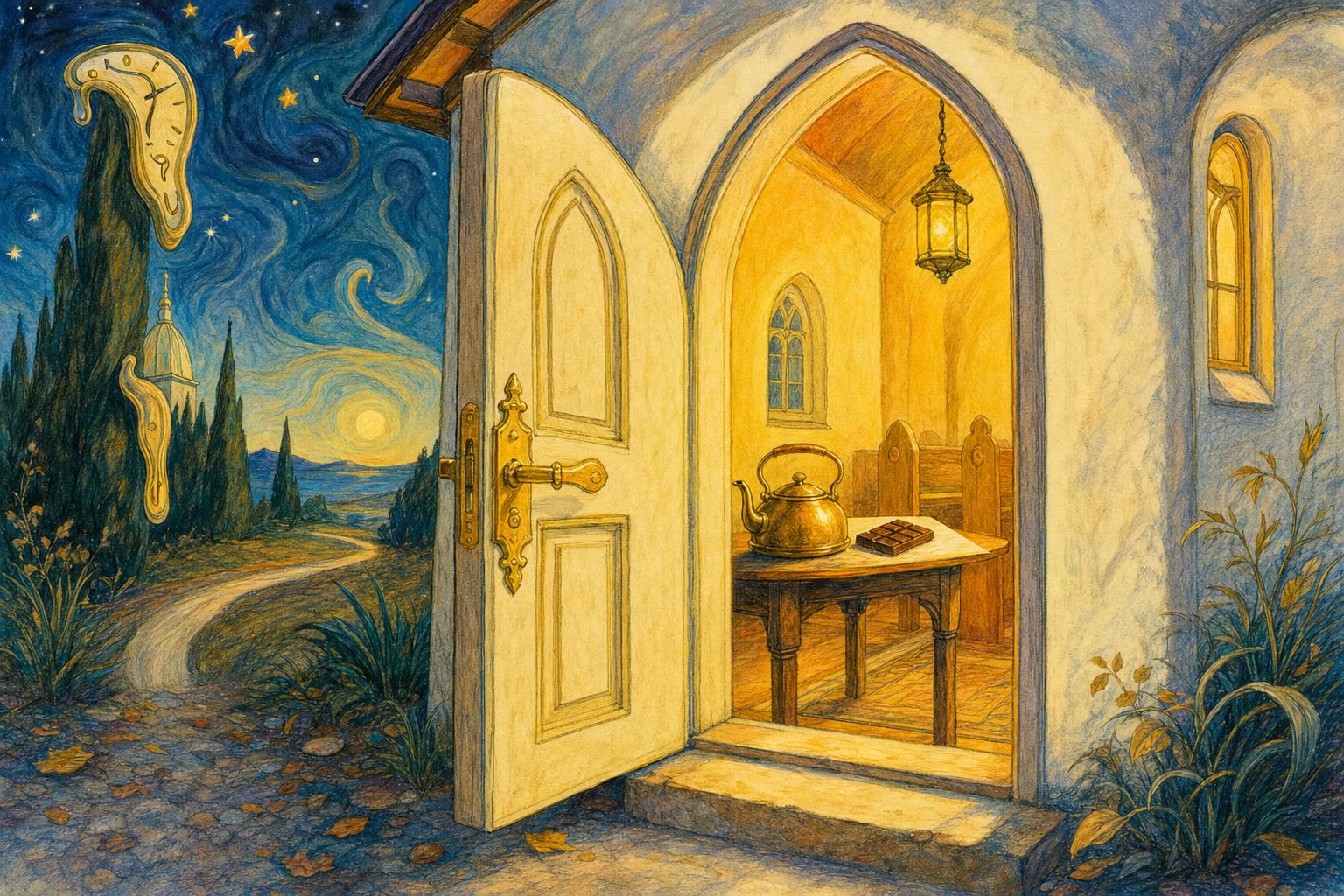
Welcome, then. The gate is carpentry, not a miracle. Come in.